A Guide to Mold Clearance Testing
When mold remediation is completed, many critical questions remain:
- Did any cross-contamination occur during remediation activities?
- Are remaining building materials dry and free of residual contamination?
- Has the underlying moisture source been adequately resolved to prevent recurrence?
- Is the affected area ‘safe’ for re-occupancy or reconstruction?
To answer these tough questions, the industry recommends Post-Remediation Verification (PRV) testing, also referred to as ‘mold clearance testing’, to confirm the remediation was a success.
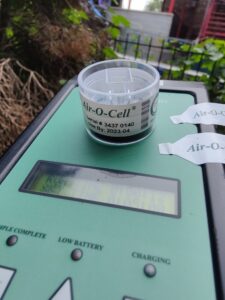
PRV testing is an evaluation performed by an unbiased, independent third party following the completion of mold remediation activities to confirm that affected and adjacent areas have been properly cleaned, dried, and restored to acceptable pre-loss conditions. PRV assessments also commonly include confirmation of healthy indoor environmental conditions through microbial air sampling to verify that indoor mold levels are consistent with normal background conditions.
What Is the Objective of Mold Remediation and PRV Testing?
The overarching goal of mold remediation is the physical removal of mold from the indoor environment, whether present on building materials or suspended in the air.
The primary objective of PRV testing is to confirm that the mold remediation company has properly removed or cleaned all water-damaged and mold-impacted materials, adequately dried the remaining building components, and, through effective air scrubbing and cleaning practices, eliminated elevated indoor airborne mold spore concentrations, returning conditions to typical background levels.
PRV testing is not intended to demonstrate that a structure is completely free of mold, as mold spores are ubiquitous in nature. Instead, the goal is to confirm that indoor conditions are consistent with a normal, healthy indoor environment after water damage events. It serves as a quality-control step that protects property owners, occupants, contractors, and insurers by verifying that remediation objectives and clearance criteria were met prior to reconstruction or re-occupancy.
Are PRVs Recommended by Industry Standards?
Yes. ANSI/IICRC S520 and other industry guidance documents recommend post-remediation verification as a best practice following mold remediation. PRV testing is widely recognized as a critical step in protecting occupant health, reducing liability, and documenting project completion.
What Is Considered Passing or Failing Mold Clearance Criteria?
Industry guidance for PRV testing is outlined in ANSI/IICRC S520, which recommends visual inspections, moisture content confirmation, and where appropriate, environmental microbial sampling. There is no single federal numeric threshold that defines a passing or failing PRV. Instead, clearance criteria is based on multiple forms of evidence evaluated together.
Passing PRV conditions generally include the following:
- The absence of visible mold growth on building materials and contents
- The absence of remaining water-damaged building materials
- The absence of settled dust and debris, consistent with a “white-glove” level of cleanliness
- The absence of musty or microbial odors
- Acceptable RH levels (between 30-50%, never exceeding 60%)
- Moisture levels consistent with dry and unaffected building materials (infrared camera and moisture meter are typically used)
- Indoor air sample results that are comparable to or lower than outdoor reference samples
- No water-damage indicator molds, such as Stachybotrys or Chaetomium, in indoor air sampling results
A failed PRV does not necessarily indicate that remediation was unsuccessful; rather, it shows that additional corrective actions may be required before mold clearance can be granted. In such cases, the inspector will provide the client with specific, targeted recommendations outlining any additional remediation measures needed to meet recommended mold clearance criteria.
If the inspector determines that remediation was successful, the process concludes with documentation of the findings and issuance of a formal clearance determination, often referred to as a Mold Clearance Letter.
How Can Bower Group Help?
If you’ve recently completed or are preparing for mold remediation at your property, Bower Group can provide independent, expert PRV testing to help confirm the work was performed properly and the remediation was success.
As an unbiased third-party environmental consulting firm, we specialize in evaluating whether mold-impacted materials were effectively removed or cleaned, remaining building components were adequately dried, and indoor environmental conditions have been restored to acceptable background levels suitable for re-occupancy.
Our PRV assessments are conducted in accordance with industry-recognized standards and are designed to provide clear, defensible documentation for homeowners, property managers, insurance companies, restoration companies, and other applicable contractors.
If you’ve had mold remediation performed and want confidence that the issue was truly resolved, Bower Group may be able to help. Please contact our offices at (630) 601-6962 for more information regarding our PRV testing services, or to book an assessment with one of our experienced Project Managers.